Apply now! The application period for the orientation program has been extended until August 31, 2026.

Research, Transfer & Early Career Researchers

Research News

14.07.26
At the third workshop of the research cluster (FSP) "Biobased Processes and Reactor Technologies" at Hamburg University of Technology (TUHH), 85 researchers from 12 institutes gathered to share recent research findings and engage in professional exchange. With a new concept, the workshop got off to a successful start in Building B and at the LUK. The FSP "Biobased Processes and Reactor Technologies" aims to foster interdisciplinary communication and provide early-career researchers with a platform for networking. Ongoing projects were showcased through oral presentations and posters.  In his welcome address, Prof. Mirko Skiborowski, spokesperson of the FSP, highlighted the significance of cross-disciplinary collaboration and the workshop’s benefits for emerging researchers. As a dynamic research university, TUHH provides excellent conditions for such interaction within the engineering sciences. The poster session, in particular, served as a key opportunity for participants to present their ongoing work and engage in deeper discussions. At the close of the workshop, special recognition was given to Sri Sannihita Chavali and Hemanth Appala for their outstanding poster presentations. Afterward, there was an opportunity to present the posters to interested students and representatives from industrial companies as part of the subsequent Process Engineering Day.
02.04.26
Can a Shared Lunch spark Collaboration Across Organisational Boundaries?
placeholder
01.04.26 Research
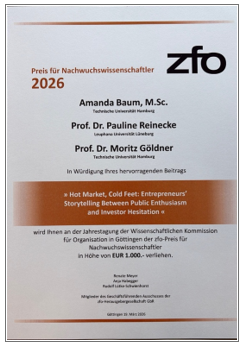
At the 85th VHB Conference (March 18–20, 2026, in Göttingen), Amanda Baum, Prof. Dr. Pauline Reinecke, and Prof. Dr. Moritz Göldner were awarded the zfo Young Researchers’ Prize.
18.03.26 Research
Characterizing electromagnetic (EM) fields in the vicinity of electronics is essential for antenna and PCB designs, ensuring devices meet legal regulations, such as electromagnetic compatibility (EMC) standards.
15.01.26 Research
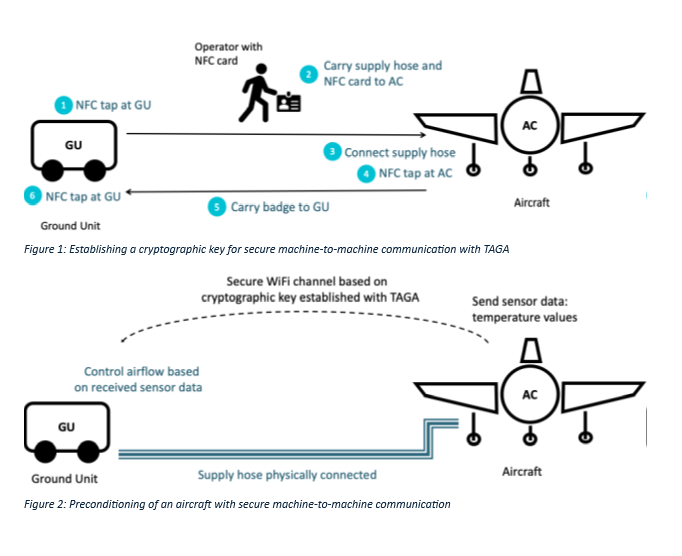
How can cryptographic keys for secure wireless communication between two machines, such as an aircraft and a fuel truck during turnaround, be established?
17.12.25 Research
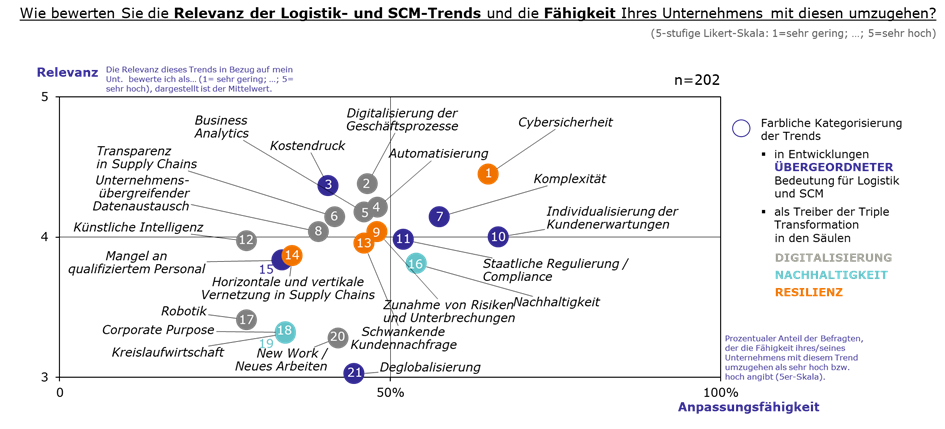
“A new beginning in times of change” – this was the title of the trend study conducted this year by the Institute for Logistics and Business Management (LogU) on behalf of the German Logistics Association (BVL).
04.12.25 Research
Transforming energy systems to achieve climate targets involves many questions that can only be answered through a detailed understanding of system physics. I particular, interactions and dynamic behaviour need to be understood.
03.12.25 Research
Entering the era of intelligent wireless networks with PIONEER_6G: How can wireless communication become not only faster, but also smarter and more reliable in the future?
27.11.25 Research
Honored for his contributions to interferometric radar technology in medicine
25.11.25 Research
SADIT-MAR is a collaborative project funded by the Lloyds Register Foundation and aims to establish a global academic network to support safe digital transformation in the maritime industry.
placeholder
24.11.25 Research
In cooperation with AWI (Alfred Wegener Institute, German Polar Research Institute) TUHH M-10 has in 2025 concluded another research voyage to the North Pole in the fourth consecutive year.
20.11.25 Research
TUHH Prof. Frank Thielecke is co-author of the new DGLR paper
20.11.25
From chips to systems: Students immerse themselves in the value chain of modern power electronics
placeholder
23.10.25
The Hamburg-based start-up EveryCarbon, a spin-off from the Hamburg University of Technology (TUHH), has secured a further €2.5 million in funding in the Circular Biomanufacturing Challenge organised by the Federal Agency for Breakthrough Innovations (SPRIND). The young company intends to use the funding to further develop its technology for the bio-based production of high-performance polymers from organic waste streams and scale it up to market maturity. EveryCarbon uses organic residues to produce a so-called platform chemical, i.e. a central building block for sustainable high-performance polymers, with the aid of microbial processes. The team's vision is zero-waste production, in which waste materials become the starting point for new materials. "What began as an idea on paper – that waste management and chemical production could one day go hand in hand – is now a functioning process,’ says the EveryCarbon team. After intensive development work, the start-up was able to demonstrate that the technology works in its own mini-plant. Funding from SPRIND now enables the next step: the transition to continuous production, testing new waste streams and initial customer trials. EveryCarbon is one of only a few teams to have made it through to the current SPRIND Circular Biomanufacturing Challenge. The aim of the challenge is to promote innovative biotechnological processes that can replace fossil resources in industrial production in the long term. In addition to TU Hamburg, numerous partners are involved in the project, including the University of Hamburg (Institute for Technical and Macromolecular Chemistry), Fraunhofer IPA, IMDEA Energía, TMI, IUE, TVT, LFKW Büsnau and the company Valensina. ‘The support from SPRIND is a strong signal for the bio-based industry in Germany,’ emphasises the team. ‘We look forward to working with our partners to lay the foundation for truly circular materials – and to make every carbon count.’
17.10.25 Research
Hamburg Horizon @ TUHH – Science meets society From urban streams to the ocean, from droughts to floods, from scarcity to waste and pollution: From October 13 to November 20, representatives from science, politics, culture, and civil society will discuss water as a habitat and resource at Hamburg Horizons. The focus will be on water consumption in households and industry, the state of our waters, conflicts over access to water worldwide, and the importance of oceans, rivers, and lakes as habitats. Nineteen Hamburg-based scientific and science communication institutions are contributing to the diverse and interactive program of discussions, lectures, guided tours, and exhibitions. The events are free of charge and will take place at various locations in Hamburg. Our TUHH program: Water, the liquid that connects nature and technology With a poster exhibition, lab tours, and short lectures, the event offers an overview of the diverse water research being conducted in Hamburg. The BlueMat cluster of excellence is developing sustainable “blue materials” that enable novel functions through the interaction of water with porous materials. Inspired by nature, applications such as energy-efficient windows or hydrovoltaics—the generation of electrical energy from changes in humidity—are to be developed. The exhibition shows how even the smallest amounts of water can influence the appearance of materials—similar to a chameleon. In the “Circular Economy” CampusLab, water serves as a working medium in a biorefinery to extract raw materials such as sugar, cellulose, and lignin from biomass such as wood or straw. Other laboratory tours focus on water analysis and the removal of pollutants using innovative water treatment processes. Patrick Huber, Institute for Materials and X-ray Physics, TUHH & DESY Irina Smirnova, Institute for Thermal Process Engineering, TUHH Michael Fröba, Institute for Inorganic and Applied Chemistry, University of Hamburg Alexander Petrov, Institute for Optical and Electronic Materials, TUHH Nima Shokri, Institute for Geo-Hydroinformatics, TUHH Mathias Ernst, Institute for Water Resources and Water Supply, TUHH This event will take place from 4:00 p.m. to 7:00 p.m. in Building A - LuK (Am Schwarzenberg-Campus 1, 21073 Hamburg) Hamburg Horizons is an initiative of the Hamburg Institute for Advanced Study (HIAS), the Körber Foundation, and the University of Hamburg. More information: www.hamburger-horizonte.de.
01.10.25
The Hanse University Alliance (HUA) supports the initiation, consolidation and expansion of research collaborations between its member universities and provides financial support for this via the Impuls Forschung programme.
placeholder
23.09.25 Research
Hamburg-based start-up Plancraft has reached another milestone in its growth trajectory with the successful completion of a Series B financing round. Led by Headline, several venture capital firms are investing a total of €38 million in the company. This has enabled Plancraft to increase its total financing to over €50 million after previous rounds. Julian Wiedenhaus, CEO of Plancraft, emphasises the central role of his team: ‘The way we live our culture every day – that's the real “headline” (pun intended).’ AI agents for the skilled trades Plancraft has developed software specifically for skilled trades businesses that digitises and simplifies administrative processes. From quotations and project plans to employee accounts, key tasks can be mapped efficiently – leaving skilled trades businesses more time for their actual core business. The next big goal: artificial intelligence. The plan is to develop AI agents that further simplify and optimise business processes. For Julian Wiedenhaus, AI is ‘not a nice-to-have, but a new way of working.’ It lowers barriers and reduces reservations, as only language or voice is needed to use it. From start-up centre to European growth Since its foundation in 2020, which was supported by the start-up centre at Hamburg University of Technology Startup Port @TUHH, Plancraft has developed dynamically: the team has now grown to 100 employees and works not only in Hamburg, but also in Austria, the Netherlands and Italy. Plancraft is currently looking for new recruits – in particular developers for AI and voice UX, as well as marketing experts. With its vision, the start-up aims to grow into the largest craftsman community in Europe and, according to Wiedenhaus, ‘build a future in which craftsmen not only survive, but thrive’. The article first appeared on the Startup Port website.
30.07.25
Despite growing awareness of gender disparities in healthcare, clinical research continues to inadequately represent women, trans*, intersex, and non-binary individuals—while also neglecting areas where men are underrepresented, such as psychiatry and psychotherapy. Addressing these gaps is essential for advancing equitable, inclusive healthcare. Program Overview Our interdisciplinary Summer School brings together Master’s and PhD students from all relevant fields to tackle these challenges. Over five days, participants will collaborate across disciplines using user-centered design thinking approach to co-create practical solutions for five pressing areas: endometriosis, prosthetics, arthroplasty, eating disorders in men, and patient safety. Importantly, individuals affected by these conditions will actively contribute throughout the program, ensuring their needs and perspectives are centered. Through expert input, peer exchange, and hands-on project work, participants will develop innovative, data-driven approaches that advance sex- and gender-sensitive clinical research and care. Scientific Foundations include expertise on the gender data gap in clinical research and principles of user-centered design thinking, providing participants with essential theoretical and methodological tools. Practical Use-Case Experts bring firsthand perspectives and domain-specific knowledge across five focus areas - endometriosis, prosthetics, endoprosthesis, eating disorders in men, and patient safety. Details Seats available: 20 participants, allocated on a first-come, first-served basis. Registration deadline: August 15th, 2025 Accommodation: Provided at Villa Viva Hamburg for participants living more than 50 km away. Details follow upon acceptance. Organizing Team A diverse and skilled group including Prof. Dr. Pauline Reinecke, Sebastian Paschen, Moritz Roloff, Dr. Eda Kalayci, Amanda Baum (on parental leave), and Prof. Dr. Moritz Göldner. Contact: Dr. Eda Kalayci (eda.kalayci@tuhh.de), Research Associate at Hamburg University of Technology's Working Group for Data‑Driven Innovation Prof. Dr. Moritz Göldner (moritz.goeldner@tuhh.de),  is an Assistant professor for Data-Driven Innovation at Hamburg University of Technology. For more information, please visit our website: https://www.tuhh.de/ddi/summer-school
17.07.25
As part of the 44th DLR Parabolic Flight Campaign in June 2025, a research team from Smart Sensors Group of Hamburg University of Technology (TUHH) participated in a scientific experiment to improve the accuracy of non-invasive cardiovascular monitoring systems.
07.07.25
How can digital systems explain their behavior in a way that is both precise and understandable? This question is the focus of CAUSE - Concepts and Algorithms for, and Usage of Self-Explaining Digitally Controlled Systems (https://rtg-cause.github.io/) - the graduate school funded by the DFG since November 2024 with the participation of three institutions - the Technical University of Hamburg, the University of Bremen and the University of Oldenburg. Almost every technical system today is digitally controlled, which increases its intelligence. However, the way it works often remains incomprehensible to developers, users and cooperating systems, which can lead to false conclusions, inefficiency and even incorrect reactions. The CAUSE research training group is tackling these problems by working on making digitally controlled systems self-explanatory for developers, users and other systems. Researchers have been cooperating within CAUSE since November 2024. They are working together to investigate self-explanation using the example of energy networks and wind farms. An overarching formalization of the term “explanation” similar to an epistemic logic allows the views of different systems to be compared, the need for explanations to be determined and explanations to be provided. CAUSE went public with a symposium at the Hamburg University of Technology (TUHH). In his welcoming speech, TUHH President Andreas Timm-Giel emphasized the strategic importance of CAUSE for strengthening regional cooperation between the partner institutions and the further development of technically sound approaches to system transparency. Prof. Görschwin Fey, CAUSE spokesperson, and Prof. Martin Fränzle, co-spokesperson from Oldenburg, outlined the vision of the graduate school: the development of algorithmic principles, formal approaches and engineering methods for systems that can provide meaningful, contextual explanations for their own behavior. The morning keynotes set the tone for the technical depth of the day. Prof. Erika Abraham (RWTH Aachen University) opened with a talk on formal verification methods as the basis for self-explanatory control systems, emphasizing the role of logical structures for traceability and trust. She was followed by Andreas Sommer (WEINMANN Emergency Medical Technology), who explained from an industry perspective how explainability in system design can promote the development of medical devices. The subsequent presentations introduced current research directions within CAUSE. The talks ranged from fundamental challenges of cyber-physical systems (Prof. Heiko Falk) and receiver-specific explanation models (Prof. Verena Klös) to algorithmic decision procedures (Moritz Buhr) and executable explanations (Ulrike Engeln). Contributions by Ivo David Oliveira and Caroline Dominik showed how context-sensitive self-explanation can be integrated into adaptive software and virtual prototyping. In the concluding poster session, all CAUSE doctoral students presented their research topics and illustrated the diversity of topics and the interdisciplinary collaborations already underway. This session provided space for a detailed professional exchange on points of contact that will shape the development of the program.
04.03.25 Research
Prof. Dr.-Ing. Timm Faulwasser has been awarded the prestigious European Control Award for his outstanding research achievements in the field of control engineering and systems theory. The prize was awarded to Prof. Faulwasser for his contributions to the optimization-based control of non-linear and stochastic systems. The prize is awarded by the European Control Association (EUCA) and honors researchers in the phase of consolidating their research profile. At the 23rd European Control Conference, Timm Faulwasser will receive the prize and give an overview of his research in a plenary lecture. Prof. Faulwasser's research focuses on optimization-based, predictive and data-driven control of nonlinear and networked systems, with practical applications in the fields of mechatronics, energy, process engineering, climate economics and beyond. This award recognizes his outstanding scientific work. We warmly congratulate Prof. Faulwasser. Source: School of Electrical Engineering, Computer Science and Mathematics
17.02.25 Research
Prof. Dr.-Ing. habil. Alexander Kölpin from the Institute of High Frequency Technology and Prof. Dr. sc. techn. Christian Schuster from the Institute of Electromagnetic Theory at Hamburg University of Technology were honoured by the IEEE professional association for their particularly outstanding scientific achievements at the beginning of the year. The two new fellows celebrated their success on 12 February 2025 together with colleagues from the School of Electrical Engineering, Computer Science and Mathematics. We congratulate them warmly. Info IEEE The ‘IEEE is the world's largest technical professional organisation dedicated to advancing technology for the benefit of mankind’ IEEE, Mission & Vision, IEEE.org. The headquarters of the Institute of Electrical and Electronics Engineers is located in New York, USA. The IEEE has around 400,000 members from all over the world who are committed to the interests of electrical engineering and information technology. They are active in science and industry. The engineering association is the most important and globally active professional organisation for electrical engineering and engineering science. Fellow status is the association's highest honour and is only awarded to 1% of its members.
22.01.25
To address the rising global energy demand and climate change, wave energy converters (WECs) offer an alternative renewable energy source, requiring optimized design and efficient dynamic calculations for effective energy harvesting from ocean waves.
08.12.24
After four years, the i-LUM project, funded by the Free and Hanseatic City of Hamburg through the BWFGB, is now coming to an end.
27.11.24
A research team led by Patrick Huber of DESY and the Technical University of Hamburg has discovered a surprising phenomenon in a nanoscopic silicate glass with a “nanoscale sponge”.
14.11.24
The Zero C project aims to create necessary conditions in higher education to provide the shipping industry and governmental institutions in Albania and Montenegro.
15.08.24
Modeling Cyber-Physical Systems (CPS) requires knowledge from various domains, including computer science, electrical and mechanical engineering, and control theory. One conventional approach to model CPS is to describe the physical relationships as a classical system of formulas. This requires, a solid understanding of the application domain is required to ensure relevant and accurate models. The behavior of a CPS can be estimated by numerical simulations using e.g. Matlab, Simulink, or Modelica. However, these approaches require that the system’s internals are sufficiently and accurately known, which often is not the case CPS. Thus we employ data driven learning approaches to automatically generate CPS models. We develop Flowcean, which offers a toolbox for modeling CPS from various industrial domains [1]. The project’s consortium spans three distinct application domains, maritime systems, energy grids, and intralogistics, represented by industrial partners KALP GmbH, VIVAVIS AG, SICK AG and KION GROUP AG. The company KALP deploys self-sufficient automated twistlock handling platform based on a hydraulic pressure system. VIVAVIS provides smart IoT solutions especially for the efficient control of smart electricity grids [2]. Associated partners bring further expertise in sensor technology (SICK) and robotics (KION) for intralogistic scenarios [3]. All partners provide either software or hardware solutions to demonstrate how Flowcean can improve testing, operation, and monitoring of CPS. Flowcean applies data driven learning to understand and replicate the individual system behavior. The modeling process is structured into four steps: 1. Loading recorded data or starting a simulation 2. Transforming data to a suitable format 3. Learning models using data driven techniques 4. Evaluating the model’s performance via various metrics Flowcean encompasses both online and offline learning techniques [4],[5]. To be able to model CPS of various domains, the entire pipeline has a modular structure. Thus, each transforming or learning step is composable with others to create distinct pipelines. So far, the design of the framework’s architecture and the implementation of basic examples prove a functioning application. Our upcoming goals are • the analysis of more complex CPS from the domains of the project’s consortium, • finalizing the integration of online and offline learning strategies as well as • the development of tools to use learned models for testing [6], monitoring, or behavioral prediction. Partners: • Fraunhofer Center for Maritime Logistics and Services (CML) • Institute of Embedded Systems, Hamburg University of Technology • Institute of Technical Logistics, Hamburg University of Technology • OFFIS – Institut für Informatik • VIVAVIS AG • KALP GmbH • SICK AG • KION GROUP AG The project is funded by the Federal Ministry of Education and Research (BMBF). Contact: Hendrik Rose & Markus Knitt Institute for Technical Logistics hendrik.wilhelm.rose@tuhh.de, markus.knitt@tuhh.de Maximilian Schmidt & Swantje Plambeck & Görschwin Fey Institute of Embedded Systems maximilian.schmidt@tuhh.de, swantje.plambeck@tuhh.de, goerschwin.fey@tuhh.de Bibliography [1] M. Knitt et al., “Towards the Automatic Generation of Models for Prediction, Monitoring, and Testing of Cyber-Physical Systems”, in International Conference on Emerging Technologies and Factory Automation (ETFA), 2023. [2] L. Fischer, J.-M. Memmen, E. M. S. P. Veith, and M. Tröschel, “Adversarial Resilience Learning - Towards Systemic Vulnerability Analysis for Large and Complex Systems”, ArXiv, 2018. [3] M. Knitt, Y. Elgouhary, J. Schyga, H. Rose, P. Braun, and J. Kreutzfeldt, “Benchmarking for the Indoor Localization of Autonomous Mobile Robots in Intralogistics”, Logistics Journal : Proceedings, no. 1, 2023. [4] J. Schyga, S. Plambeck, J. Hinckeldeyn, G. Fey, and J. Kreutzfeldt, “Decision Trees for Analyzing Influences on the Accuracy of Indoor Localization Systems”, in International Conference on Indoor Positioning and Indoor Navigation (IPIN), 2022. [5] E. Veith et al., “palaestrAI: A Training Ground for Autonomous Agents”, in European Simulation and Modelling Conference (ESM), 2023. [6] S. Plambeck and G. Fey, “Data-Driven Test Generation for Black-Box Systems From Learned Decision Tree Models”, in International Symposium on Design and Diagnostics of Electronic Circuits and Systems (DDECS), 2023.
25.07.24
System-on-Chip (SoC) technology is a driving force behind the growth and advancement of various digital technologies in our daily lives.  Focussing on cyber-physical systems (CPS), the past decade has seen massive growth in demand for different kinds of SoCs, encompassing increased computational power, energy efficiency, and cost-effectiveness. To ensure the reliable functionality of SoC devices, post-silicon validation plays a pivotal role. This is one of the most intricate and costly stages of the SoC design cycle, primarily because the post-silicon validation process generates a large amount of data (e.g. trace files, electrical test reports, oscilloscope images, etc., see Figure 1). While the complexity of SoCs is growing, the amount of test data is growing too and there is pressure to reduce the post-silicon validation time amidst fierce market competition. To overcome this issue, we propose AI (artificial intelligence) for smart post-silicon validation. This is a  collaborative venture between the massively parallel systems group, the smart sensors group, and NXP Hamburg. Our project introduces an AI-powered method to automatically detect anomalies in the test traces and oscilloscope images, which provides several benefits including a reduction in validation time, errors, and accelerated time-to-market. One of the standout features of our models lies in their training on real SoC project data, thanks to NXP Hamburg for the collaboration!  Training our models on 8,044 labeled oscilloscope images—deemed 'good'—we further evaluated their performance using the Reconstruction Error (RCE) metric. Although RCE is a prevalent metric, we introduce the use of Kernel Density Estimate (KDE) to refine anomaly detection accuracy. The decision whether a  given oscilloscipe image is anomalous or not is made by identifying a suitable threshold for the RCE (RCETh) and KDE (KDETh) metrics. Figure 2 shows the model’s performance to detect anomalies in oscilloscope images. Our goal is to minimize false negatives (predicted label 0, actual label 1) to ensure that critical anomalies are not overlooked and reliable SoCs are delivered to users, while simultaneously aiming to maintain false positives (predicted label 1, actual label 0) within an acceptable range to reduce human effort. While the combination of metrics greatly reduces the number of false negatives (68%) compared to using only the RCE metric, our quest remains to drive the false negatives to zero, ensuring airtight SoC reliability.  Our journey unveils the potential for AI to revolutionize the complex and crucial process of post-silicon validation, thus bringing fast and more reliable SoCs to market to meet the growing demands of digitalization of our world by CPS. Contact Info:  Kowshic Ahmed Akash (kowshicahmed.akash@nxp.com)  NXP Hamburg Prof. Dr.-Ing. Sohan Lal (Tel.: +49 40 42878 2037, sohan.lal@tuhh.de)  Massively Parallel Systems Group (E-EXK5) Prof. Dr.-Ing. Ulf Kulau (Tel.: +40 42878 2601, ulf.kulau@tuhh.de) Smart Sensors (E-EXK3) Hamburg University of Technology (TUHH)  Am Schwarzenberg-Campus 3, 21073 Hamburg
10.06.24
Correctly placing hydropower plants in a river is one of many examples where good knowledge of the bottom topography, also called bathymetry, is needed. While direct measurement of the bathymetry is possible, for example with a side scan sonar operated by a boat or an underwater remotely operated vehicle, this is very time consuming and expensive. Therefore, methods that can infer the bathymetry from the easier to measure surface height of the water are attractive. Mathematically speaking, this is an inverse problem where unknown parameters of a system are reconstructed from typically incomplete and noisy measurements of the system state. One approach to solve such inverse problems is so-called partial differential equation constrained optimisation, where system parameters are computed that reproduce the measurements but also satisfy physical constraints like mass or momentum conservation. Researchers from TUHH’s Institute of Mathematics (E-10) and Institute of Mechanics and Ocean Engineering (M-13) as well as from the the Department of Mathematics at the University of Hamburg (UHH) have published a joint paper that provides the first demonstration that this approach can reconstruct a real-world bathymetry. In their experiment, they placed a small hill, manufactured from skate board ramps, at the bottom of a 12 m long wave flume. The water at rest had a depth of 30cm and waves were being generated by a wave flap. Four sensors were installed that measure wave heights. This measured data was used to reconstruct the manufactured bathymetry by numerically solving a minimisation problem with the shallow water equations as constraints. The mathematical algorithm was implemented in Python using the Dedalus software. It could generate a qualitative reconstruction of the hill, even though the change in wave height caused by the bathymetry was only in the range of a few millimetres. Contact: Judith Angel judith.angel(a)tuhh.de Prof. Daniel Ruprecht ruprecht(a)tuhh.de Institute of Mathematics (E-10)
30.05.24
The CRC hosted the third international workshop on "Tailor-made Multiscale Materials Systems" at the TUHH from 15 to 17 May 2024

Research @ TUHH

Welcome!

Research @ TUHH

The TUHH is a young and dynamic technical university with around 100 professors and 7,800 students. It is anchored in excellent basic and applied research and thus radiates into the Hamburg metropolitan region and beyond.

In many national and international research networks, our scientists create the basis for answers to technological and social challenges with new basic knowledge, or contribute directly to new solutions with engineering applications.

Based on the realisation that innovations and new approaches to solutions often emerge at the boundary between disciplines, the research structure of TUHH is designed to promote interdisciplinary cooperation among scientists. For this reason, the structure is not dictated by faculties or departments, but instead research is organised into five research fields. The research fields address important scientific, social and particularly relevant topics for Hamburg.

Within these research fields, further substructures support a lively and differentiated research environment.

The TUHH sees itself as an engine of innovation. It actively promotes dialogue between companies and scientists, especially in the Hamburg metropolitan region. Knowledge transfer to industry, business and civil society are important elements in TUHH's actions, as is the support of start-ups. Long-established institutions and structures such as Tutech Innovation GmbH, the Startup Dock, Hamburg Open Science just to mention some, support these endeavours.

I invite you to take a virtual tour trhrough the research enivironment of TUHH. For further information, please feel free to contact our team.

Prof. Dr.-Ing. Irina Smirnova

Vice President for Research


Research Organisation - TU Hamburg Research Fields

The research topics of TU Hamburg are bundled in five interdisciplinary research fields.
Within these research fields, further substructures support a lively and differentiated research environment.

Knowledge & Technology Transfer

Knowledge and technology transfer have been central at TU Hamburg since its foundation. TUHH founded the first transfer company in Germany, Tutech Innovation GmbH (www.tutech.de), as early as 1992. Tutech supports scientists in topics such as contract research and intellectual property rights, and it advises on the acquisition of funding, e.g. in the area of the European Union.


At the TU Hamburg, founders are supported and accompanied not only by Tutech but also by the TU's own startup network Startup Port@TUHH (www.tuhh.de/startupport).

Societal & Economic Impact

The results and processes of university research are also measured by their influence on the economy and society.

This section presents research topics of particular relevance to society, fields of activity, events as well as TUHH projects and cooperations with industrial partners.

Early Career Researchers

Through its Graduate Academy, TU Hamburg empowers doctoral researchers and postdocs through tailored training, consultation, and a strong professional network—helping early-career researchers develop into independent scholars equipped to tackle the challenges of our time.

Coordinated Collaborative Research

Research Funding

Research funding plays a central role in academic life and enables universities to expand and strengthen their research activities in various areas. By attracting third-party funding from public and private sources, universities can finance innovative research projects, acquire new equipment and resources and support talented young researchers.

Team & Contact

Vice President Research

Prof. Dr.-Ing. Irina Smirnova

Tel.: +49 40 428 78 30 40

Email: vpf(at)tuhh(dot)de