


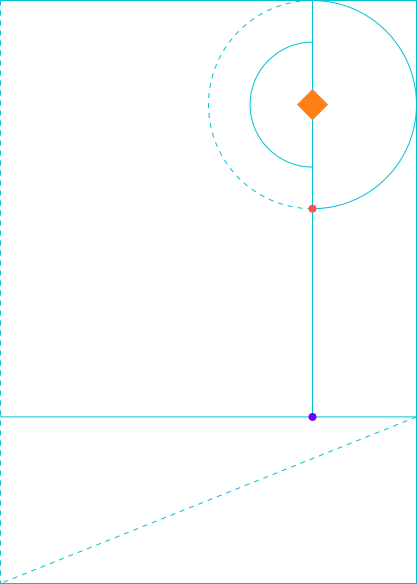
Integrating porous systems such as mesoporous silicon (pSi) into reliable macroscopic devices for sensing, photonics and energy storage requires stringent control over their structural homogeneity. Radial variations in layer thickness and porosity are frequently attributed to effects of the edge sealing or to pinned gas, while the macroscopic impact of the internal geometry of the electrochemical cell is largely overlooked.
Using porous silicon as a model system, the authors demonstrate that the insulating cell body itself significantly shapes the electric field. Finite element simulations of the current distribution in two dimensions with axial symmetry were combined with spatially resolved near infrared (NIR) spectrometry to investigate the distortions caused by standard features of the cell.
The internal widening step of the container, commonly used to accommodate the counter electrodes, strongly compresses the electric field and generates localised zones of accelerated etching in the shape of rings. Optimising the height of this step reduced the radial deviation of the thickness of a porous silicon layer sixfold, to just 2 percent. Predictive simulations further show that internal obstacles such as stirring rods can be positioned deliberately, either to prevent unwanted current shadows or to actively manipulate the current distribution for precise structuring in three dimensions.
Mindful hardware design that prioritises the spatial distribution of the current is therefore a critical and efficient strategy to maximise the yield of highly homogeneous porous media, directly enhancing their scalability and performance in applications of functional nanomaterials.
The study was carried out at the Institute for Materials and X-Ray Physics at Hamburg University of Technology and the Center for X-Ray and Nano Science CXNS at DESY, within the CRC 1615 SMART Reactors.
Marc Thelen, Manuel Brinker, Patrick Huber (2026). Shaping the Electric Field: Overcoming Geometric Inhomogeneities in the Electrochemical Fabrication of Mesoporous Materials. ACS Appl. Eng. Mater.


